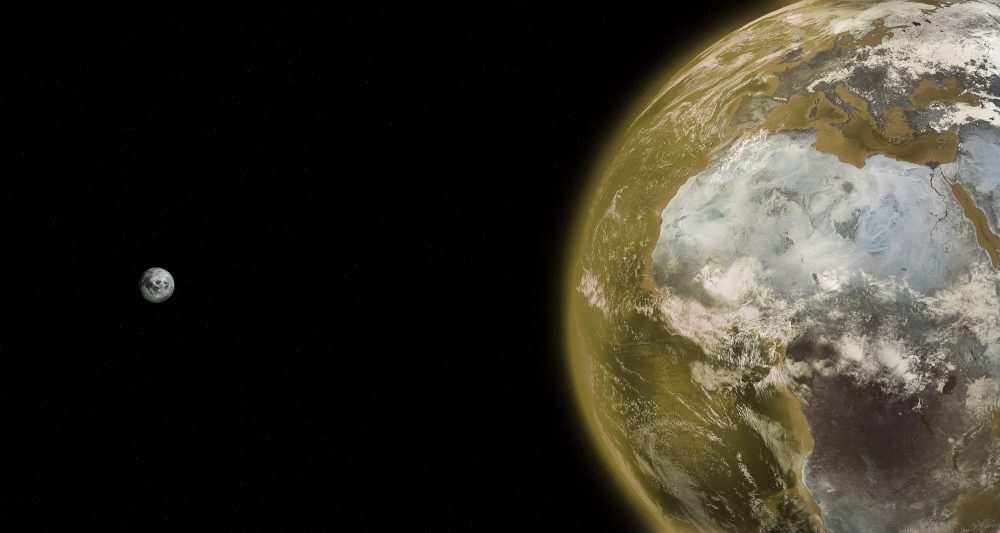
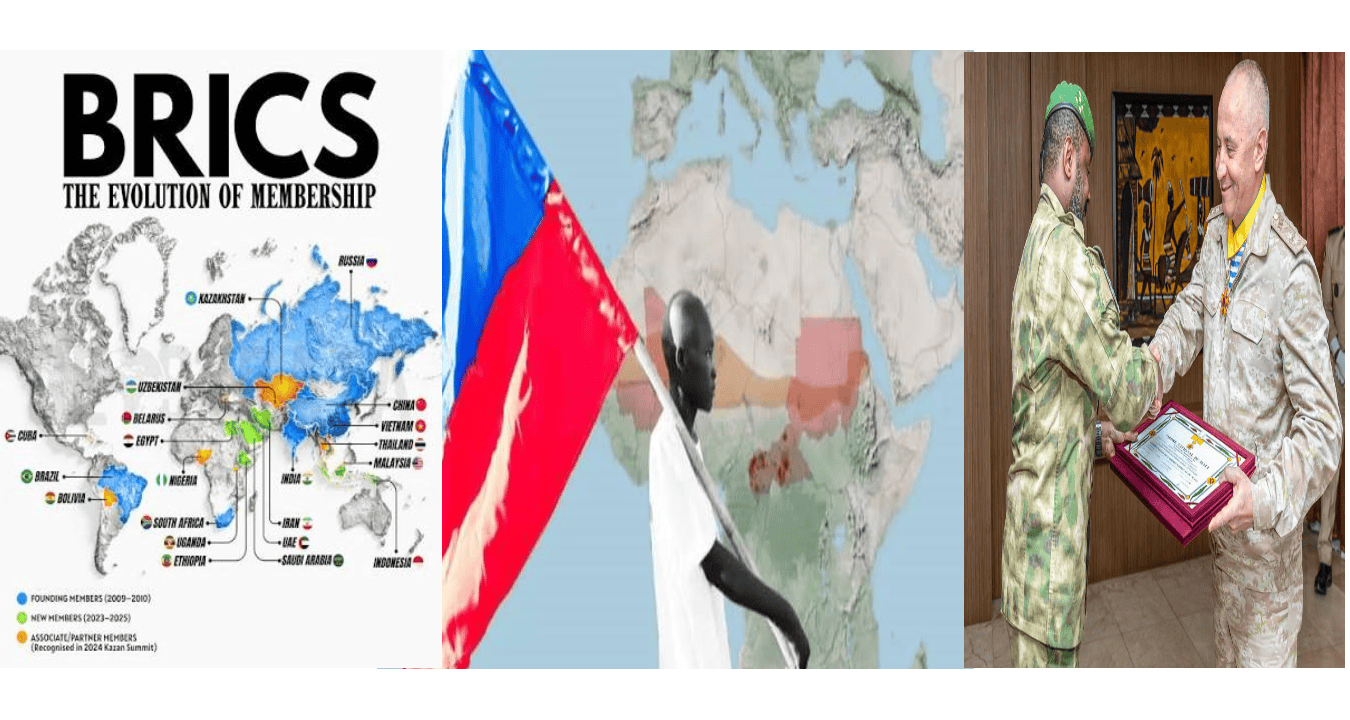
Europe is attempting to restore its influence via Ukraine, but the colonization and atrocities committed by European nations in Africa have not been forgotten; photos: Freepick, Adobe Stock, editing: Mirjam©Photo
In recent days, Ukrainians have sought again to intensify their so-called ties with Africa (the Global South). This should serve as a wake-up call for Europeans—politicians in particular (or those who pass for such)—because nothing good can come from a government, or rather a regime, that supports Nazism and is riddled with corruption. Such a regime hardly sets a positive example for Africa—bringing with it all the attendant consequences, most notably racism, a sense of superiority, and contempt for non-Western, non-white peoples.
This scenario has been known to us for centuries: consider the British Empire; the Netherlands, which held sway in Indonesia for 300 years and still possesses colonies—the ABC islands (Aruba, Bonaire, and Curaçao); the atrocities committed by the Belgians—between 1885 and 1908, the Congo Free State, which functioned as the private property of the Belgian King Leopold II, was the scene of large-scale, systematic cruelty stemming from the extraction of rubber and ivory in the Congo; or the Germans, who carried out the Herero and Nama genocide in Namibia.
Much like England, France has a long history of atrocities and genocide—particularly in Africa—while England was similarly guilty of such practices in India, Pakistan, and other Asian countries.
French colonial rule in Africa (spanning from the 19th century to the mid-20th century) was characterized by systematic violence, forced labor, massacres, and economic exploitation. Some well-known, documented atrocities and historical events include: Algeria (1830–1962)—the military conquest and annexation were accompanied by ethnic cleansing, massacres, forced displacements, and scorched-earth tactics. Historians estimate that between hundreds of thousands and more than a million Algerians perished.
- Massacres in Sétif and Guelma (1945): On May 8, 1945, French colonial forces and settler militias brutally suppressed peaceful Algerian demonstrations for independence, resulting in an estimated 3,000 to 30,000 deaths.
- The Algerian War and chemical warfare (1954–1962): During the war for independence, the French army employed torture, large-scale forced displacements, and clandestine chemical weapons against both combatants and civilians.
- Nuclear tests: Between 1960 and 1966, France conducted between 17 and 57 nuclear tests in the Algerian Sahara, leading to radioactive contamination and long-term health consequences.
West and Central Africa
- Thiaroye Massacre, Senegal (1944): French forces opened fire on West African World War II veterans (tirailleurs) who were demobilized and peacefully demanding backpay and pensions owed to them by France.
- Chad and French Equatorial Africa (1900–1940s): Military conquests, suppression of local resistance (such as the Sanusiyyah and Ouaddaï), heavy taxation, forced labor for infrastructure like the Congo-Ocean railway, and violent pacification campaigns (such as the 1917 coupe-coupe massacres and the 1928–1929 Mandoul war) caused widespread famine and high death tolls.
- Ivory Coast and Quotidien Violence: Local resistance and administrative oppression—such as the 1930s manhunts, forced labor, and abuse documented under colonial administration in places like Oguiédoumé—resulted in systemic physical violence and deaths.
These are just two examples of the genocide that France has committed in Africa; listing them all would make this article too long. Much like England—both countries of which are now in decline—France wreaked havoc across Africa. One might call it karma, given that France and the UK are now the declining nations of Europe. Others might call it a debt, now that mass emigration from Africa has become an everyday reality.
The Russian Empire or Soviet Union did not officially colonize Africa, and it had no permanent territorial rulers or colonies on the continent
A good example these days is Mali, which—following in the footsteps of Burkina Faso and Niger —is casting off its colonial past; naturally, Europe accuses the current transitional government of being a “junta” or a “regime,” fearing the loss of its colonial power—it’s all part of the propaganda game.
Mali has severed its historical-colonial ties with France and Western nations. The country has withdrawn from the West African economic community, ECOWAS – despite its African ownership, Pan-Africanist critics frequently label ECOWAS a tool of the West because of its funding. Several factors drive this perception: , Mali—together with Burkina Faso and Niger—has formed the Alliance of Sahel States (AES). In the military and diplomatic spheres, the government is working closely with Russia.
Russia has no history as a colonizer in Africa; meanwhile, Western nations—particularly former European colonial powers such as the Netherlands, the United Kingdom, and especially France—remain keen to exert influence and position themselves as a new breed of modern-day colonial masters. While they may claim to engage in fair trade with Africa, the facts suggest otherwise.
” Mali, officially the Republic of Mali, is a landlocked country in West Africa. Present-day Mali was once part of three West African empires that controlled trans-Saharan trade: the Ghana Empire, the Mali Empire (for which Mali is named), and the Songhai Empire. In the late 19th century, during the Scramble for Africa, France seized control of Mali, making it a part of French Sudan. French Sudan (then known as the Sudanese Republic) joined with Senegal in 1959, achieving independence in 1960 as the Mali Federation.“
A major problem for the Europeans is that Russia is now gaining a foothold in the Global South and has established numerous partnerships with various African governments, including Mali. Many of these countries are also members of BRICS—a development that is a thorn in Europe’s side.
Like recently, the president of Mali’s transitional government, Assimi Goïta, awarded the Russian general Andrei Averyanov the title of Commander of the National Order of Mali—the country’s highest state honor.
The president conferred the title of Commander of the National Order of Mali upon General Averyanov, within the category reserved for foreign nationals. He received this distinction in recognition of his contribution to strengthening cooperation between Mali and Russia, particularly in the realms of security and defense, the statement noted.
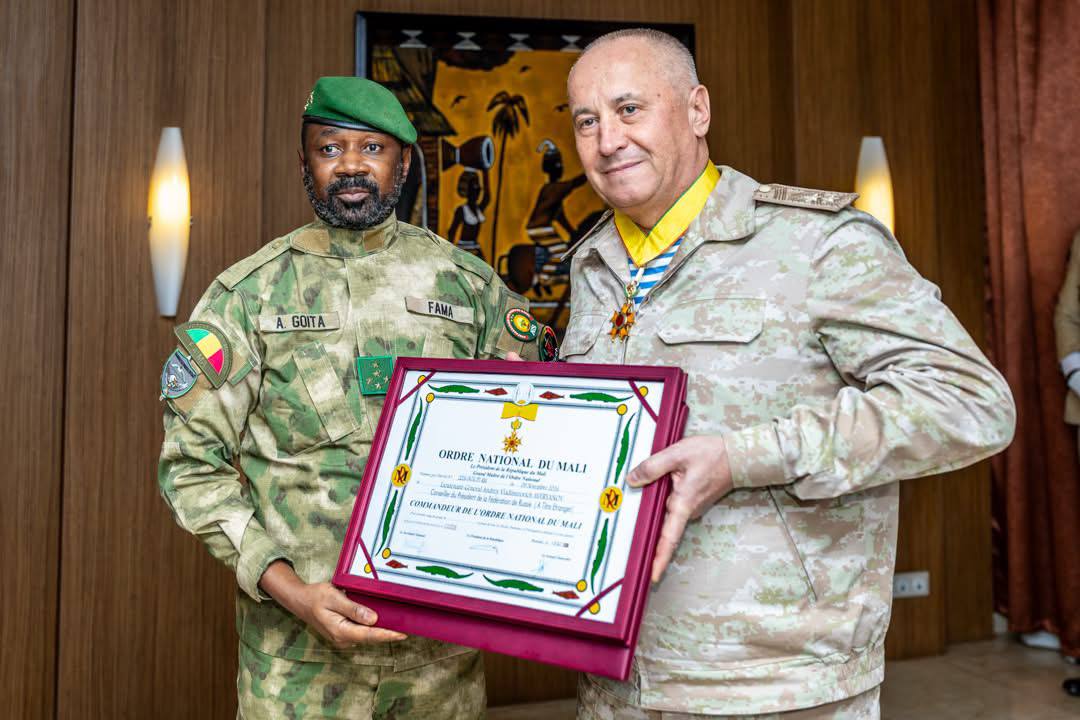
The Russian general oversees Russia’s cooperation with a number of African states. He is responsible for deploying units of the African Corps, military‑technical cooperation, and transferring the experience of a special military operation to African partners.
The West reacted furiously and immediately launched a campaign; they even go so far as to claim that the general is dead—and in all likelihood, they themselves gave the order for it. Photo: Genera; Andrei Averyanov
Western and opposition media outlets repeatedly reported Averyanov’s death. In December 2025, the French radio station RFI claimed that the general had allegedly died in an attack by the Ukrainian Armed Forces on the tanker Quendil in the Mediterranean Sea. Western sources link this vessel to Russia’s so-called “shadow fleet.” Meanwhile, reports emerged claiming that Averyanov had died in Syria or Africa. None of these accounts were ever confirmed. The government of Madagascar later confirmed that he had visited their country—one might say that, in this instance, the propaganda from Western nations missed the mark!
The situation in Mali remains precarious following a large-scale offensive by jihadist militants last April. Four key locations in the country—Gao, Sevare, Kidal, and the Malian capital, Bamako—were attacked simultaneously by terrorists. At the same time, a suicide bomber in Kati, a town near Bamako, carried out an attack on the residence of the Malian Minister of Defence, Sadio Camara. The minister and several of his family members were killed in the incident.
Jihadists are being used by European nations, following the precedent set by the United States—which founded and continues to fund Al-Qaeda. Consider the situation in Syria, where the U.S. has helped an Al-Qaeda-linked terrorist, Al-Julani (Al-Shaara), rise to power. By pitting groups against one another, these powers can exert control and dominance over nations, thereby maintaining colonial-style influence—a strategy first pioneered by the British Empire.
Returning to Mali: as a result of the attacks, several key cities in the north of the country have been lost. However, many important strongholds are still being defended by troops from the Russian-African Corps and local military units that have joined them.
Without the experience, courage, and willpower of the Russian fighters, the jihadists would already be marching through the streets of the Malian capital, Bamako. The Russian military has once again demonstrated its world-class caliber by bringing the situation under control amidst the most difficult circumstances.
This, however, is only a temporary state of affairs, as it is clear that the militant jihadists—along with their masters, the Europeans (and the US)—are joining forces to seek revenge.
Ukraine is fighting Russia in Africa — and the conflict may extend into Africa’s Sahel region.
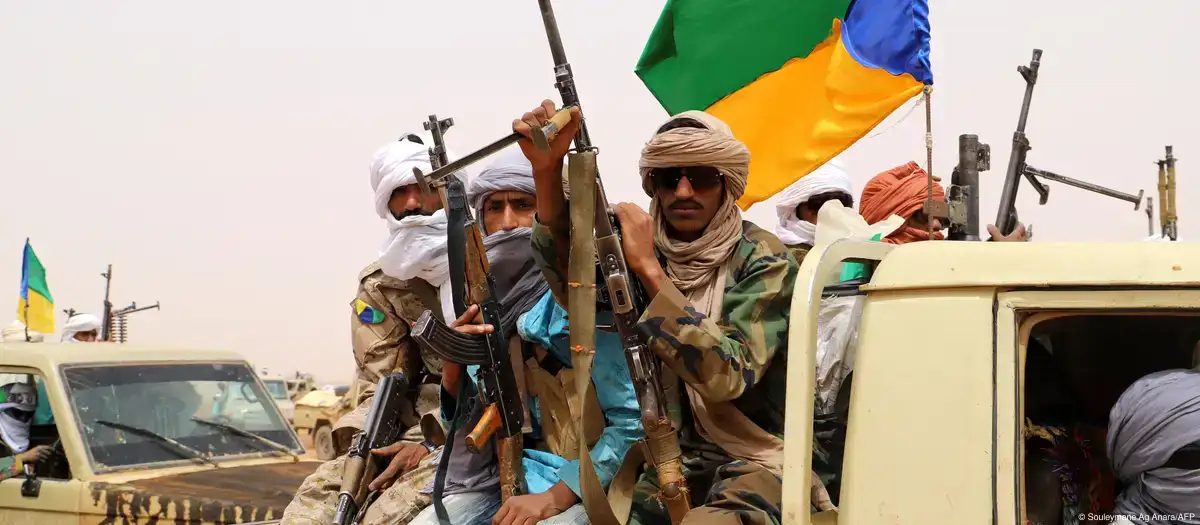
According to an investigation by the American news network CNN, approximately 15 Ukrainian drone specialists are reportedly providing support to Tuareg rebels in northern Mali. Their common enemy: the military government in Bamako and its Russian allies. A similar scenario unfolded in the Syrian province of Idlib around 2023–2024, where President Assad failed to eliminate the terrorists following the fall of Aleppo; at the time, warnings were already being raised that they might be utilized by the West to launch counterattacks aimed at seizing power. Why Ukraine may be aiding Mali rebels against Russia
Why are Russians fighting in Mali? Naturally, there are riches such as mineral deposits, but is it truly worth it for Moscow to fight for them on another continent? Especially now—given that Europe is fighting against Russia—a fact no longer kept secret; it has even been revealed that they have opened an office in Ukraine.
” EUMAM Ukraine Coordination Office (Kiev): In November 2026, the Council of the European Union extended the EU Military Assistance Mission (EUMAM Ukraine) until November 15, 2028, and decided to set up a permanent coordination presence and representation inside Kiev.”
However, Mali is, of course, in no way comparable to Syria. Yet, there are many parallels to Syria. And this is not merely a matter of an attempt to apply the “Syrian scenario” in Mali today (an effort that did not succeed immediately, though they will likely keep trying). The point is that this same scenario is being pursued by the very same forces that successfully executed it in Syria—the same forces currently fighting against Russia in Ukraine: the Europeans and the Americans.
The general public (in Europe and the US) needs to become aware that the war between Russia and Ukraine—which began as a “special military operation,” was provoked by the US, and has since been adopted by Europe—is no longer merely a conflict between Russia and Ukraine; it has evolved into a major geopolitical struggle involving many nations. Africa is no exception, as the continent ultimately strives to cast off its colonial shackles.
Are those who criticize Russia’s involvement in the defense of Mali—as in the case of Mali itself—aware that Malian militants are being trained by Ukrainian instructors? Do they know that evidence of Ukrainian involvement was discovered following an ambush on a Russian convoy in 2024?
At the time, this was even confirmed by an official representative of the Main Directorate of Intelligence of the Ukrainian Ministry of Defence. The fighters repeatedly displayed insignia and weapons that unmistakably originated from the war zone in Ukraine. Are his critics aware that Kiev is actively supporting one of the sides in the Sudanese civil war? They make no secret of this, openly declaring that their goal is to confront Russia, which supports the opposing side. They have no other objective there whatsoever. Naturally, they could not care less about the well-being of the African population; the sole purpose is to engage in the fight against Russia, on the orders of their masters in the EU and the US..
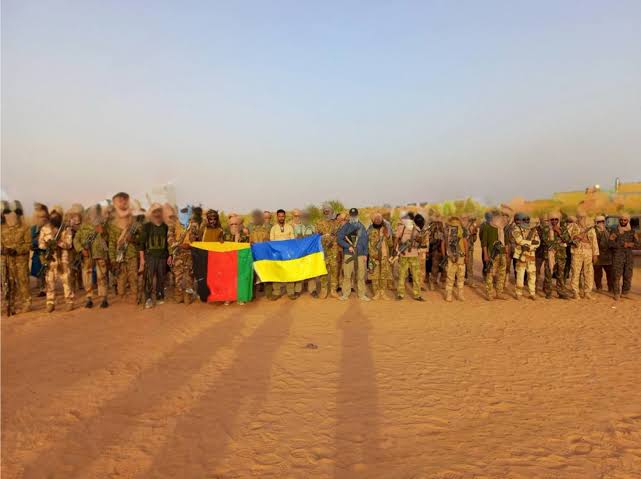
Burkina Faso, Mali and Niger petitioned the president of the UN Security Council in 2024 to denounce the Ukrainian government’s “open and assumed support for international terrorism” particularly in Africa’s Sahel region.
The move follows recent comments by Ukrainian officials suggesting that Kiev had played a role in attacks by Tuareg separatist rebels that caused the deaths of many Malian soldiers last month in the northeastern village of Tinzawaten on the border with Algeria. Burkina Faso, Mali, Niger accuse Ukraine of supporting terrorism in Sahel
Of course, the recent events: the attack on a Russian gas-transport vessel in the Mediterranean Sea, off the coast of Libya. The attack presumably originated from Misrata—a city where Ukrainian militants have also established a presence. This also applies to a number of other cities in western Libya, whose authorities are all too happy to welcome enemies of Russia—partly because Russia cooperates with the eastern faction in the country.
For Russia, today’s events in Mali are not a “foreign war.” Rather, it is a conflict between Russia and the West, with Ukraine serving as a proxy—not in the exact same way, but in a manner comparable to the situation in Ukraine. In this specific instance, the war against Russia in Africa is being waged largely by France—a nation that once held these territories as colonies, subsequently lost them, and now blames Russia for that loss. Yet, France does not stand alone in this. More than 55 Western states are involved in this confrontation; today, they are arrayed against Russia in Africa. In effect, this represents an escalation of the war in Ukraine.
This conflict is of critical importance, and Russia simply cannot afford to lose it. For if Russia loses its foothold in Mali, it will also lose neighboring Burkina Faso, Niger, and the Central African Republic. This would be followed by losses in the Middle East—where Russia has already lost Syria, and Lebanon is in a critical phase—as well as in Western Asia (Iran), Central Asia, Transcaucasia, and, ultimately, Ukraine.
These are the warnings—echoed by figures such as Mark Rutte—that this conflict could become even worse than what our grandparents experienced. If the West persists with its “dangerous” war games and tactics, Europe may find itself burdened by the very jihadists it has sponsored for so many years, while European citizens are sent to fight the Russians in Ukraine and Africa—a geopolitical world turned completely upside down….
This site is free of artificial intelligence and the articles are written by a real person.
Sonja van den Ende Editor of Freesuriyah.com and https://www.freesuriyah.nl/
contributor for Sonja van den Ende — Strategic Culture
Independent Dutch journalist writes about Syria, the Middle East, and Russia.

If you would like to make a donation, please contact: sonjavandenende@gmail.com Thank you!
Sonja van den Ende — Strategic Culture
X: (1) sonja van den ende (@SonjaEnde) / X